Musical Game for Kids
- 3.8
- Rating
- 10.00M
- Installs
- Free
- Price

 Analysis by App-foxy
I approached Musical Game for Kids expecting a simple children’s music title, and that is exactly where its appeal lies. It is a free music game from Orange Studios Games, designed for an Everyone audience and built around an easygoing, educational party mood rather than serious musical training. The presentation is immediately approachable, so a child can begin exploring without first learning a complicated ruleset.
My first impression was that the game is best understood as a playful introduction to musical interaction. It is not trying to replace an instrument tutor, a rhythm course, or a full-featured music-making app. Instead, it offers a low-pressure way for younger players to spend a few minutes engaging with sound and timing. That narrow purpose helps it feel accessible, although it also means older children and experienced players may find the challenge limited.
Musical Game for Kids is available at no upfront cost, with optional purchases priced at $3.99 per item. The game has reached over ten million installs and holds an average rating of 3.7 from around six thousand ratings, which suggests a broad audience but also a mixed experience from families. I would treat it as an easy title to try, not as a guaranteed fit for every child.
You May Also Like

 Blood Strike: 2.5 Anniversary
Blood Strike’s Loadouts Turn Every Drop Into a Tactical Gamble
A close look at Blood Strike’s custom loadouts: how fast access to signature weapons reshapes its battle royale rhythm, rewards preparation, and narrows the gap between fights.

 Pandora - Music & Podcasts
Pandora’s Music Is Easy to Start, but Harder to Recover
Pandora’s strength is its low-effort path from a seed to a station. Its weak spot is how much confidence it asks you to place in connection, setup, and quiet recovery.

 8 Ball Pool
 Is Built on Rivalries, Rematches, and Routine
A close look at the rivalries, rematches, shared routines, and unanswered safety questions that turn a quick pool match into a persistent mobile community.

 Samsung Music
’s Quiet Strength Is Playing What You Already Own
Its reach comes less from spectacle than from dependable access to a personal library. That simplicity is both the app’s strongest retention engine and its ceiling.

 AccuWeather: Weather Radar
AccuWeather Review: A Quick, Clear Forecast for Everyday Decisions
For everyday plans, the best forecast is the one you can understand quickly. AccuWeather makes rain timing, radar, and local conditions easy to act on, with a few trade-offs.

 Hill Climb Racing
Why Hill Climb Racing Still Turns Crashes Into One More Run
A tiny car, a bumpy hill and one more upgrade: Hill Climb Racing keeps resurfacing because its simple chaos makes every near-miss feel personal.
More From Our News Desk
View All News


How the game turns music into a child-friendly world
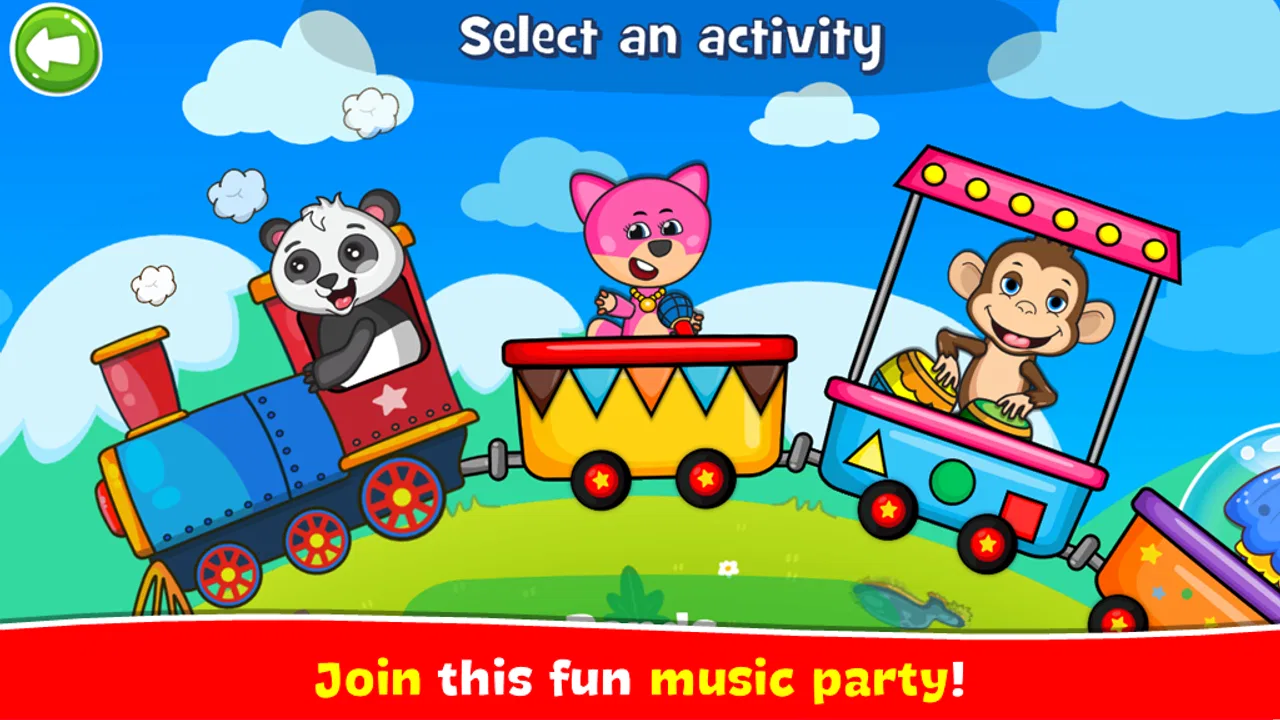
The most successful part of the experience is its clear identity. The game presents music as a friendly activity rather than a test. Its visual direction supports that idea: the setting feels like a cheerful gathering where the player is invited to participate, not a classroom where mistakes are heavily judged. That distinction matters for young children, especially those who may hesitate when an app appears too technical or demanding.
The art and setting work together to keep the mood light. I did not feel pushed toward optimization or competition. The overall tone is closer to joining a small musical celebration than completing a demanding arcade challenge. For a parent looking for a short activity after school, that gentle framing can be more useful than a visually impressive game filled with pressure and complicated progression.
There is also a practical advantage to a focused visual language. Children can usually understand the purpose of a music game more quickly when the screen communicates playfulness and participation. The game’s identity is not buried under a dense interface or a large fictional universe. That makes it easier to hand the device to a child and let them explore with limited explanation.
At the same time, the simplicity can feel modest. Players who expect a richly developed world, character customization, or a long adventure may not find enough variety here. The setting serves the musical activity instead of becoming a separate destination. I see that as a deliberate trade-off: less narrative depth, but a clearer path into the central idea.
A visual style that supports short sessions
The game’s visual mood is particularly suitable for brief use. A child can open it during a quiet moment, play for a while, and stop without needing to remember a complicated story or manage a large collection of objectives. This makes it a reasonable option for a family tablet, a supervised waiting-room activity, or a quick break when a parent wants something more purposeful than passive video.
That does not mean every child will stay interested for the same amount of time. Children who enjoy repetition may happily return to the musical activities, while those who need constant discovery may move on quickly. I would introduce it as one activity in a broader rotation, not as the only game on a device.
One useful approach is to let the child play first without correcting every action. The welcoming presentation works best when exploration remains voluntary. Afterward, an adult can ask what sounds or actions the child enjoyed. This turns a short session into a conversation about rhythm and listening without making the game feel like homework.
Sound, rhythm, and the feeling of participation
Because this is a music-focused game, the sound design carries more responsibility than it would in an ordinary children’s title. The audio gives the experience its reason to exist. Even when the mechanics are simple, a responsive musical atmosphere can make a child feel involved rather than merely tapping through menus.
I found the strongest use case is guided experimentation. A child can try an action, listen to the result, and repeat it to understand the relationship between input and sound. That basic loop is valuable because it encourages attention. The child is not only watching bright visuals; they are also learning to notice changes in timing, sequence, and musical response.
The game is best enjoyed with the device’s sound turned on, so the environment matters. In a noisy room, the musical details may lose their impact, and a child may focus only on the visual cues. A quieter setting makes it easier to hear what is happening and gives the activity a more coherent mood. Headphones can help in some situations, although younger children should use them with adult supervision and sensible volume.
One practical tip is to play alongside the child for the first session. Rather than taking over, I would ask them to predict what might happen before they tap or select something. That small pause encourages listening and makes the game feel more interactive. It also helps an adult see whether the child understands the musical cues or is simply pressing everything quickly.
The rhythm element is approachable, but I would not confuse approachability with deep musical instruction. The game can support curiosity about sound and timing, yet it is not a substitute for learning an instrument, reading notation, or following a structured practice plan. If a child specifically wants to build technical rhythm skills, a dedicated educational tool with progressive lessons would be a better choice.
Why the sound and pacing fit younger players
The pacing generally works because it does not demand a long commitment before the player can participate. Young children often lose interest when an app spends too much time explaining rules or presenting menus. A music game benefits from getting to the central activity quickly, and this title’s straightforward concept supports that kind of entry.
There is a trade-off, however. A relaxed pace may feel too gentle for children who want increasingly difficult challenges. If the player is looking for fast reactions, competitive scoring, or a demanding rhythm test, the experience may seem more like a musical toy than a conventional rhythm game. That is not a flaw for its intended audience, but it is an important expectation to set before downloading.
For families, the sound-first design creates an opportunity for shared play. An adult can listen for patterns, clap along, or invite the child to describe what changed. Those activities add depth that the app itself does not need to force. In my view, the game works best when it becomes a starting point for musical attention rather than a self-contained lesson.
Where the mechanics fit and where they may feel thin
The mechanics are built around accessibility. The game’s short description calls it a musical game, and the full experience follows that uncomplicated promise. I did not approach it as a title with elaborate systems, long-term strategy, or a demanding progression structure. Its value comes from making musical play easy to understand.
That simplicity is helpful for first-time players. A child who is not comfortable with traditional games can still approach a music activity without worrying about complex controls. It also makes the title suitable for adults who want to introduce a young player to interactive sound without setting up a full music-learning routine.
However, ease of entry can reduce replay pressure. Once a child understands the basic interaction, the motivation to continue depends heavily on personal interest in the sounds and presentation. Children who need unlockable goals, a strong narrative, or increasingly difficult levels may ask for something more substantial. I would watch how the child responds after several short sessions rather than assuming that a large install base means universal staying power.
The title is also a better fit for casual touch play than for precision-focused rhythm gaming. If your child already enjoys demanding rhythm titles, this one may feel too forgiving or too limited. On the other hand, that forgiving quality is exactly why it can work for a younger beginner who would be discouraged by strict timing windows or complicated instructions.
A realistic family scenario
Imagine a child waiting while a parent finishes a short household task. The adult opens the game, checks the sound level, and lets the child explore for a few minutes. Instead of asking the child to complete a long stage, the parent can sit nearby and respond to the sounds: “Which part did you like?” or “Can you try that again?” When the task is finished, the game can be closed without interrupting a large story or leaving a complicated objective unfinished.
That scenario shows the title’s strongest practical quality: it fits into small pockets of time. It can also work during a family music moment, where an adult uses the game as a bridge to clapping, singing, or discussing instruments. The app does not need to carry the entire educational experience. Its role is to make the first step inviting.
There are a few points I would check before allowing independent play. First, remember that the game includes optional purchases at $3.99 per item, so device-level purchase controls are sensible if a child uses the device alone. Second, confirm that the device is compatible: the current version is 1.52 and requires Android 6.0 or later. Third, decide whether the child is ready to use a sound-based game without turning the volume up excessively.
The Everyone content rating makes the game broadly suitable in age terms, but an age label does not replace supervision. Younger children may still need help with navigation, sound settings, or purchase boundaries. I would also avoid presenting the game as formal education. It is more accurate and more useful to describe it as playful musical practice and exploration.
How it compares with other music options
Compared with a music-streaming app, this game offers participation instead of passive listening. A streaming service gives access to a much wider range of songs, artists, and playlists, while this title gives a child a more direct sense of cause and effect. If the goal is simply to hear varied music, the usual listening app is stronger. If the goal is to make listening feel like play, this game has the clearer role.
Compared with a digital instrument app, it is likely to be less open-ended but easier to approach. Instrument simulators can provide more control and may better suit a child who wants to experiment with notes or melodies. They can also be confusing for a beginner. Musical Game for Kids has the advantage of a more focused, child-oriented presentation, while a virtual instrument becomes the better choice when the player wants control over specific musical elements.
Compared with a structured music-learning platform, this game is lighter and less demanding. A lesson-based alternative is preferable for families seeking measurable practice, guided theory, or a clear curriculum. This title is preferable when the immediate goal is to make musical interaction feel friendly and low pressure. The two types can complement each other, but they should not be judged by the same standard.
It also differs from competitive rhythm games. Those games often reward accuracy, speed, and repeated attempts at difficult sections. Here, the atmosphere matters more than proving technical skill. That makes it a gentler introduction, but it also means a player searching for a serious challenge should choose another category of music game.
Who should try it and who should skip it
I would recommend trying it if you want a free, approachable music activity for a young child, especially one who is curious about sound but not ready for a formal instrument app. It is also a sensible choice for short supervised sessions, family play, and children who respond better to cheerful exploration than to strict instruction.
I would skip it if your main requirement is advanced composition, detailed instrument control, a deep progression system, or a demanding rhythm challenge. Older players may outgrow the uncomplicated design, and children who need constant novelty may not return after the initial discovery. In those cases, a dedicated music-learning app, virtual instrument, or competitive rhythm game would offer a better match.
The rating of Everyone makes it easy to consider for a family device, while the free entry point removes much of the risk of trying it. Still, optional purchases and the possibility of limited long-term depth mean I would test it with the child rather than treating it as a complete solution. The game’s best value appears when expectations stay modest and specific.
My final view on its playable mood
Musical Game for Kids succeeds by keeping its art direction, sound, and pacing aligned with one clear idea: music should feel inviting. The setting creates a friendly party atmosphere, the audio gives the interactions meaning, and the simple mechanics keep the first steps comfortable. Nothing about the experience needs to be intimidating, which is a genuine strength for younger players.
Its limitations come from the same design choice. A calm, accessible musical activity will not satisfy everyone looking for depth, precision, or a long adventure. The game offers a doorway into musical play rather than a complete room filled with advanced tools. I appreciate that honesty because it makes the title easier to place in a family’s routine.
For me, the best way to use it is in short, shared sessions where an adult encourages listening instead of rushing through taps. Let the child explore, keep the volume sensible, and use the sounds as a prompt for conversation or clapping. That approach brings out more value than simply handing over the device and expecting endless replay.
Orange Studios Games has created a gentle music game with a clear audience and a coherent mood. It is free to start, accessible on devices running Android 6.0 or later, and suitable for families who want an uncomplicated introduction to interactive sound. I would recommend giving it a try for younger beginners, while choosing a more specialized alternative when the child is ready for formal lessons, deeper creation tools, or a stronger challenge.
FAQs for Musical Game for Kids
01What age group is the Musical Game for Kids suitable for?
The Musical Game for Kids is designed for children aged 3 to 8 years old. It features simple, engaging gameplay that helps young children develop musical skills, rhythm, and coordination. The app includes colorful graphics and intuitive controls that are perfect for little hands, making it a great educational tool for early childhood development.
02Does the app require an internet connection to play?
No, the Musical Game for Kids does not require an internet connection for its core features. Once downloaded, children can enjoy the game offline. However, some additional content or updates may need an internet connection, so it's recommended to connect occasionally to access the latest features.
03Are there in-app purchases or ads in the Musical Game for Kids?
The game offers a free version with optional in-app purchases. These purchases unlock additional songs, instruments, and mini-games to enhance the experience. The app is designed to be child-friendly, so ads are minimal and appropriate, ensuring a safe environment for kids while they play.
04What educational benefits does the game offer?
Musical Game for Kids provides numerous educational benefits, including enhancing auditory skills, improving rhythm and timing, and fostering creativity through music creation. It also helps children learn about different musical instruments and styles, making it an effective tool for both entertainment and learning.
05Is parental control available in the app?
Yes, the app includes parental control features to ensure a safe gaming experience. Parents can manage in-app purchases, set time limits, and control access to certain features. This allows parents to tailor the app’s use according to their child’s needs and ensure a secure environment while using the app.
Pros
- Engaging and colorful graphics.
- Intuitive controls for young users.
- Wide variety of musical instruments.
- Encourages creativity and exploration.
- No ads in the free version.
Cons
- Limited songs in free version.
- Requires internet for some features.
- In-app purchases can be pricey.
- Lacks parental control options.
- Some features need frequent updates.

Musical Game for Kids
Gallery